Clear records
history record
cancel
Clear records
history record






 The browser own share function is also very useful~
 Service
 Service
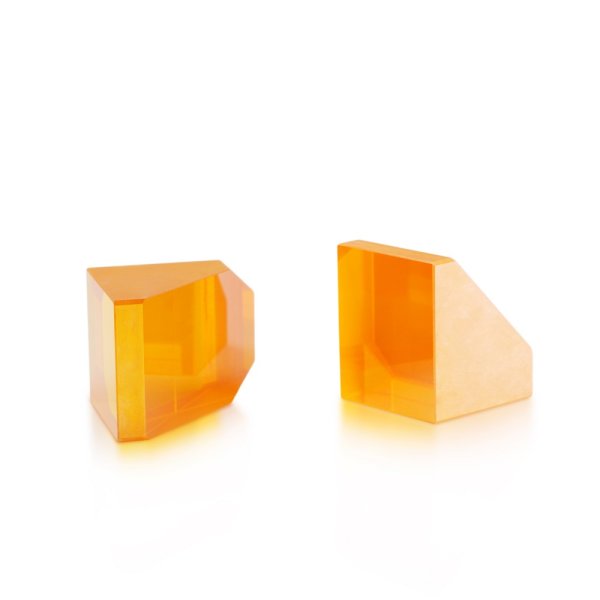
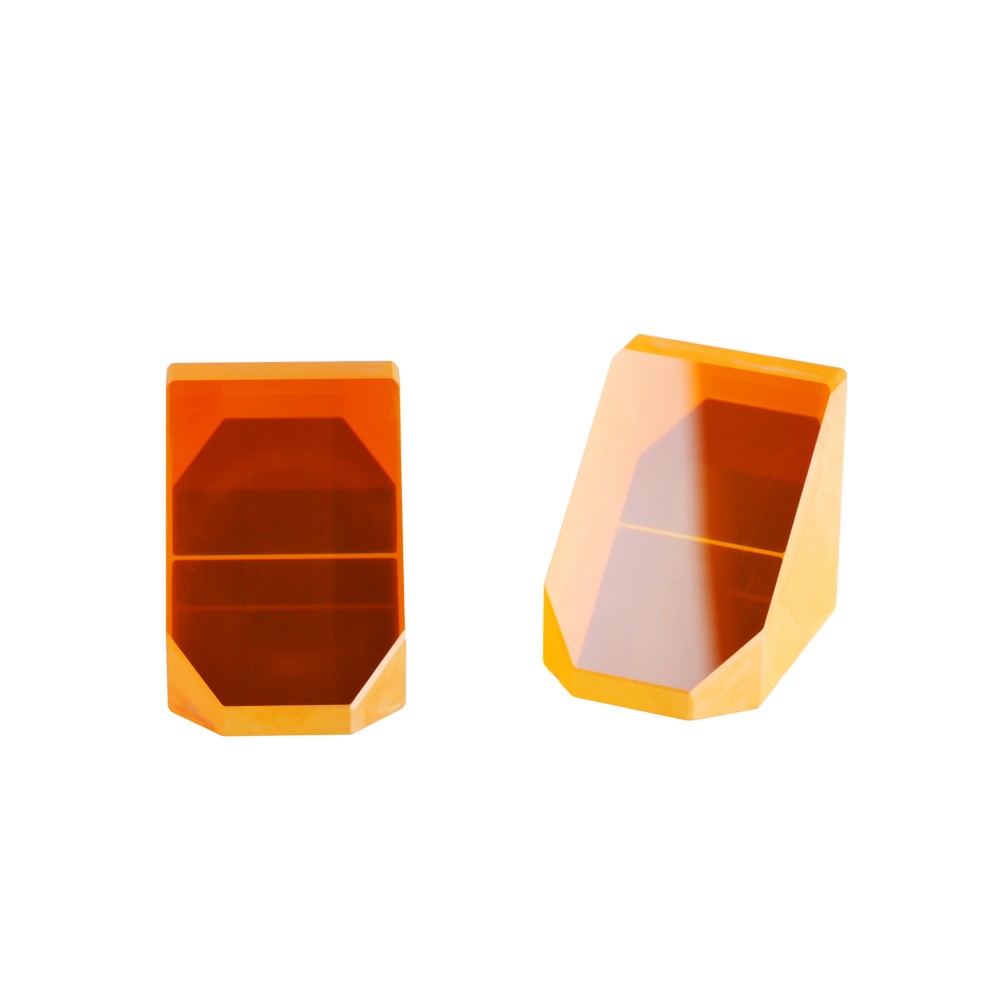
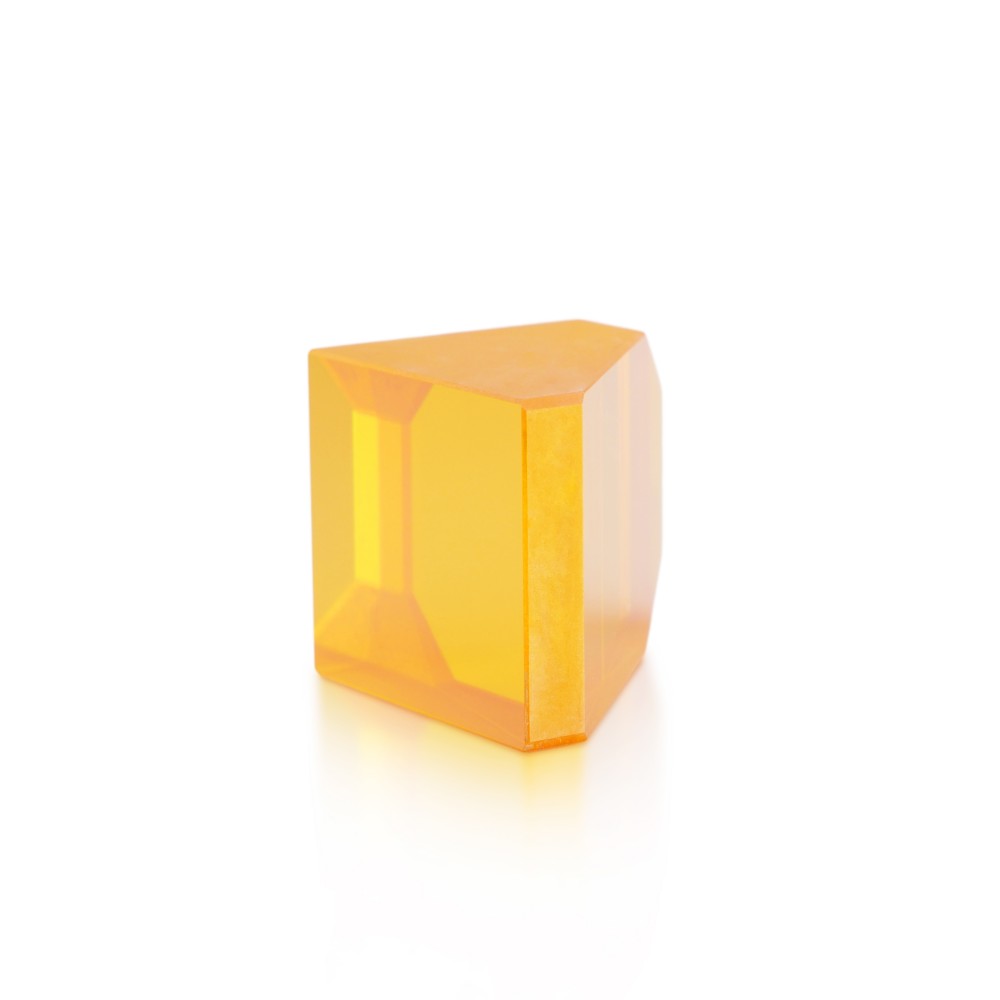
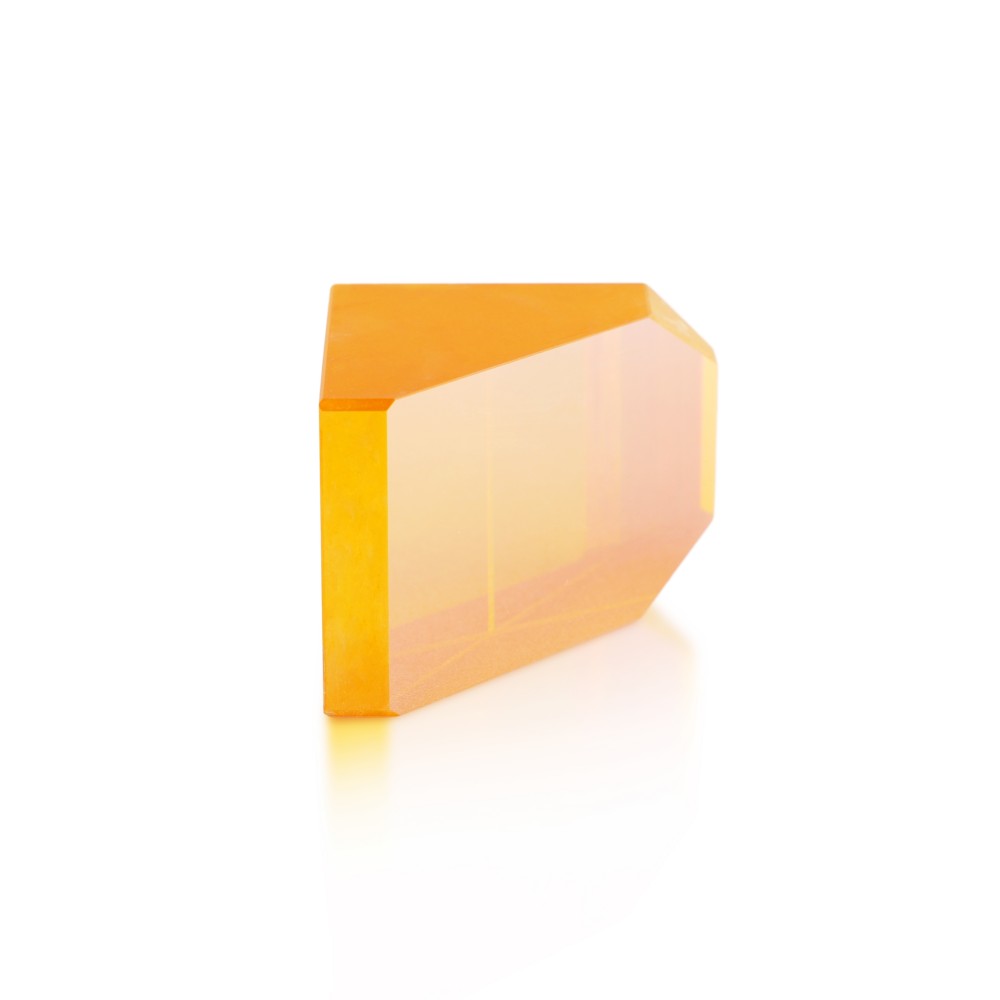
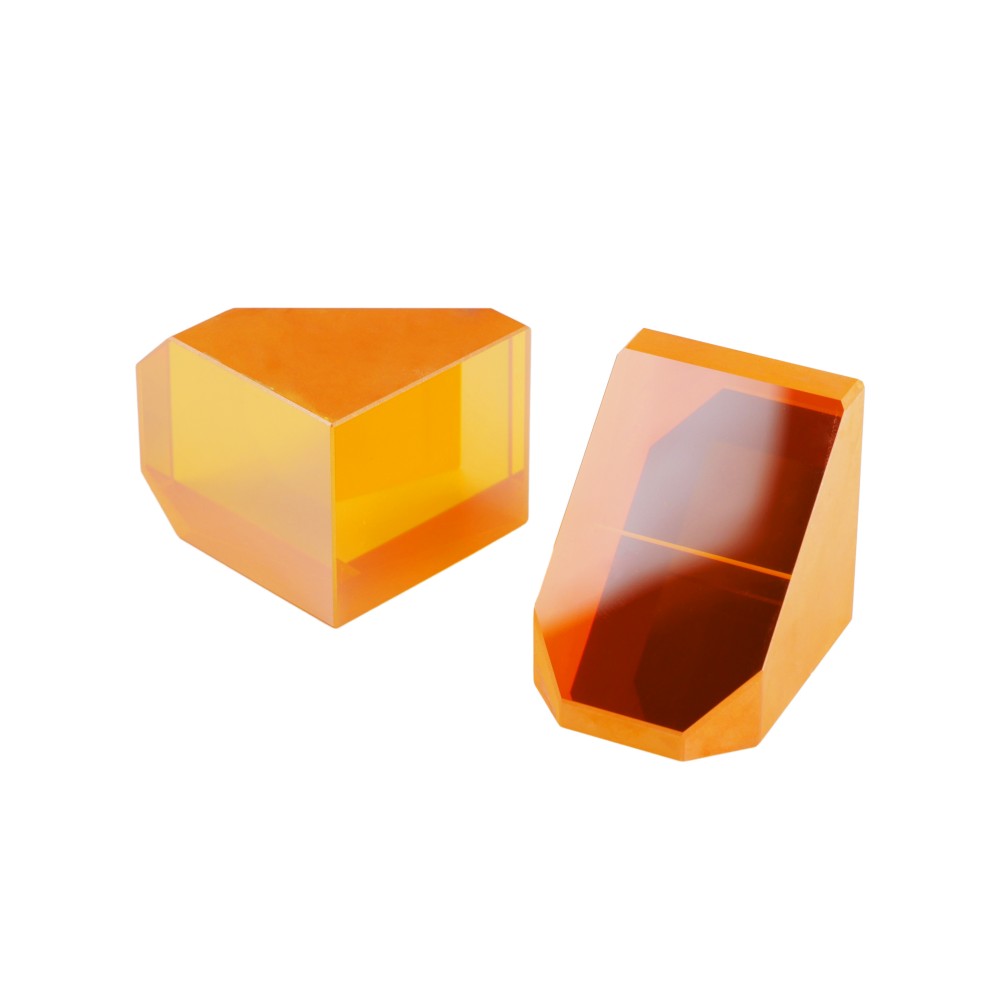
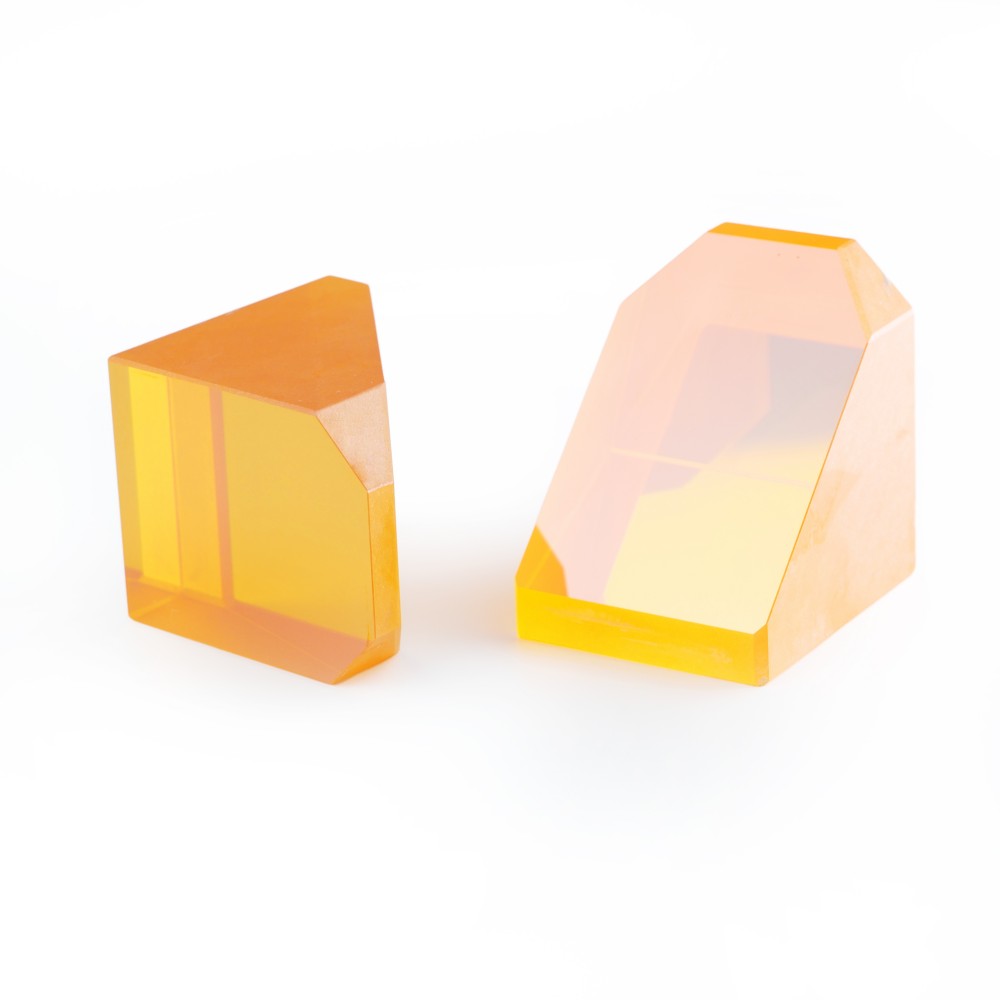
Zinc selenide (ZnSe) optical prisms are advanced optical components made from the compound zinc selenide. ZnSe prisms are highly valuable in optical systems requiring high transmittance, low absorption, and minimal optical distortion in the infrared range. Due to its unique combination of optical clarity, mechanical strength, and thermal stability, ZnSe is used in a wide variety of demanding applications. Whether in military, medical, aerospace, or industrial environments, ZnSe remains the material of choice for advanced optical technology.
Performance characteristics
Broad Spectral Transparency: Zinc selenide has excellent optical transmission in both the visible and infrared regions, with particular strength in the infrared spectrum (approximately 0.5 to 20 microns). This makes ZnSe prisms ideal for infrared applications such as thermal imaging, spectroscopy, and laser systems.
Low absorption and minimal light loss: ZnSe has a low absorption coefficient in the infrared range, minimizing light loss and ensuring efficient light transmission. This property is crucial for high-performance optical systems that need to maintain light intensity and clarity.
High refractive index: ZnSe has a refractive index of approximately 2.4 at infrared wavelengths, enabling it to efficiently bend light with high precision. This property makes ZnSe prisms useful for controlling light paths, beam splitting, and wavelength separation in complex optical systems.
Thermal stability: ZnSe is stable over a wide temperature range, making it suitable for high-temperature applications. Its relatively low coefficient of thermal expansion (CTE) ensures that its optical properties remain stable despite temperature fluctuations. This thermal stability is particularly important for infrared optics used in environments where temperature fluctuations are common.
Durability and Scratch Resistance: ZnSe is durable and resistant to physical damage. While not as hard as other optical materials like sapphire, it is still very resistant to scratches and other mechanical stresses, ensuring long-term reliability in harsh environments.
application
Infrared Imaging and Thermal Sensing: ZnSe prisms are essential in infrared imaging systems, such as thermal imagers, night vision systems, and surveillance applications. Their high transmittance in the infrared range enables them to effectively capture heat signatures, which is crucial for military, security, and industrial monitoring applications.
Laser Systems: ZnSe prisms are used for laser beam steering, wavelength separation, and beam shaping in high-power laser systems. They can process high-intensity infrared light with minimal distortion, making them ideal for industrial laser applications, medical lasers, and laser-based material processing.
Spectroscopy: In infrared spectroscopy, ZnSe prisms are used to scatter light and analyze materials based on their absorption or reflection properties at different wavelengths. The material's transparency in the infrared region makes it ideal for environmental monitoring, chemical analysis, and medical diagnostics.
Aerospace and Military: ZnSe prisms are often found in optical systems used in aerospace and military technology, such as missile guidance, targeting systems, and optical sensors. Their ability to efficiently transmit infrared light and their resistance to environmental factors such as temperature changes and mechanical stress make them crucial in military and space applications.
Optical Communications: ZnSe prisms are used in optical communications systems, including free-space optics (FSO) and fiber-optic systems, where optical signals need to be manipulated or separated. The material's ability to process infrared light is particularly beneficial in communications systems that rely on wavelengths in the infrared spectrum.
Medical devices: ZnSe is used in medical optics, particularly for non-invasive diagnostic tools such as infrared thermometers, endoscopy systems, and optical coherence tomography (OCT) devices. The material’s transparency in the infrared spectrum enables precise imaging and measurement of internal tissues, blood flow, and other physiological parameters.
Industrial and Semiconductor Applications: ZnSe prisms are used in industrial applications involving laser cutting, welding, and materials processing. They are also used in semiconductor inspection and metrology systems, where precision optics are needed to detect defects or measure wafer surfaces.
Technical requirements | Commercial Grade | Precision grade | High precision grade |
Size range | 1-300mm | 2-300mm | 2-300mm |
Dimensional tolerance | ±0.1mm | ±0.025mm | ±0.01mm |
Thickness tolerance | ±0.1mm | ±0.025mm | ±0.01mm |
Angle tolerance | ±3' | ±30" | ±5' |
Surface quality | 60-40 | 40-20 | 10-20 |
Surface accuracy | 1.0∧ | ∧/10 | ∧/20 |
Coating | AR/AR 7-12μm/10.6μm/2-13μm | ||
Chamfer | 0.1-0.5mm×45° | ||
Material | zinc selenide | ||
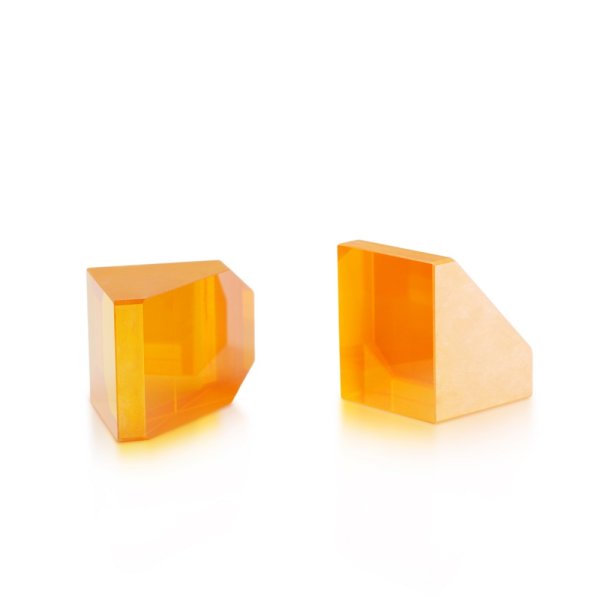
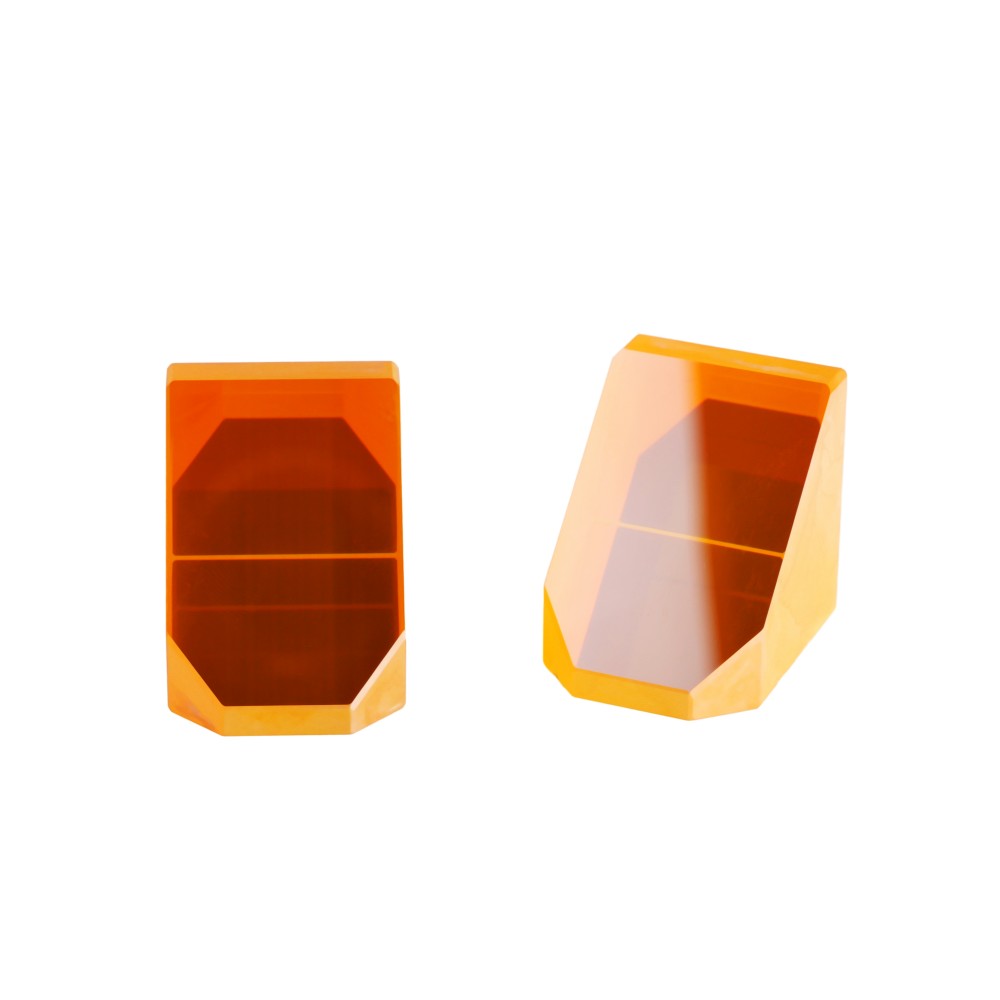
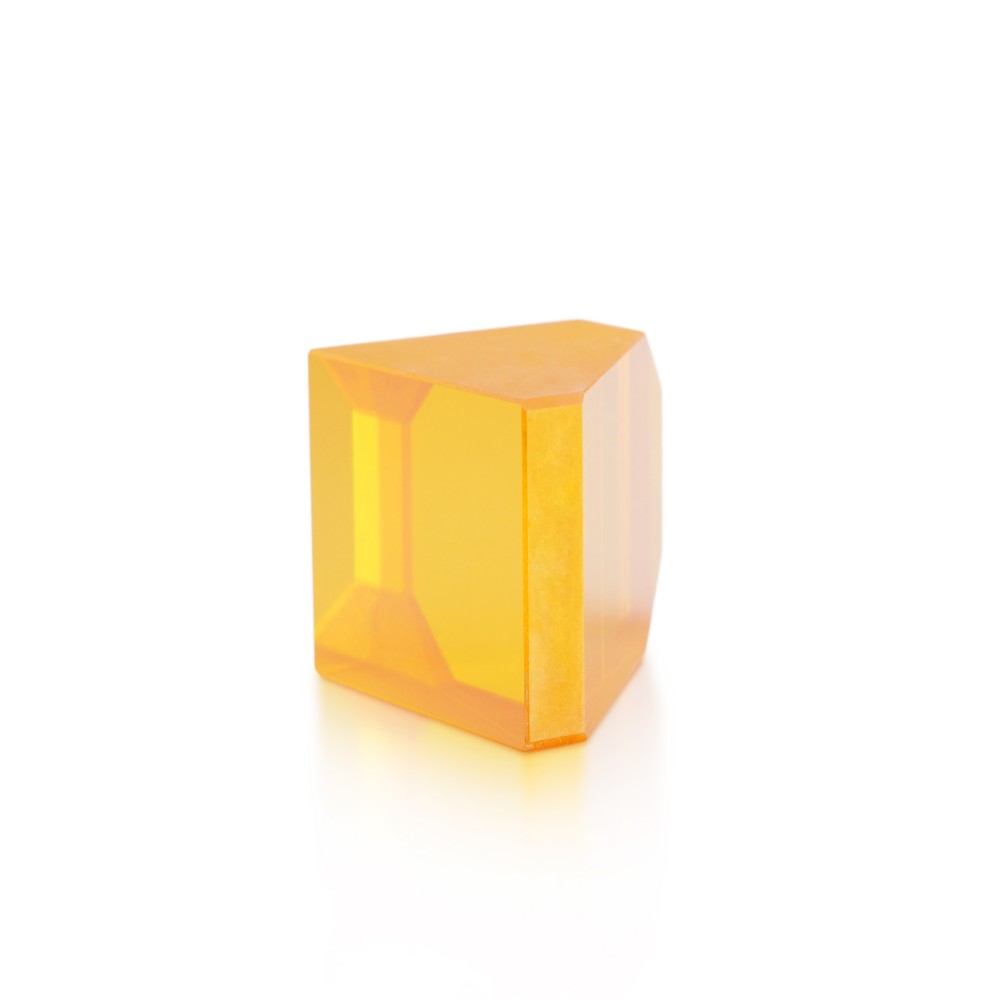
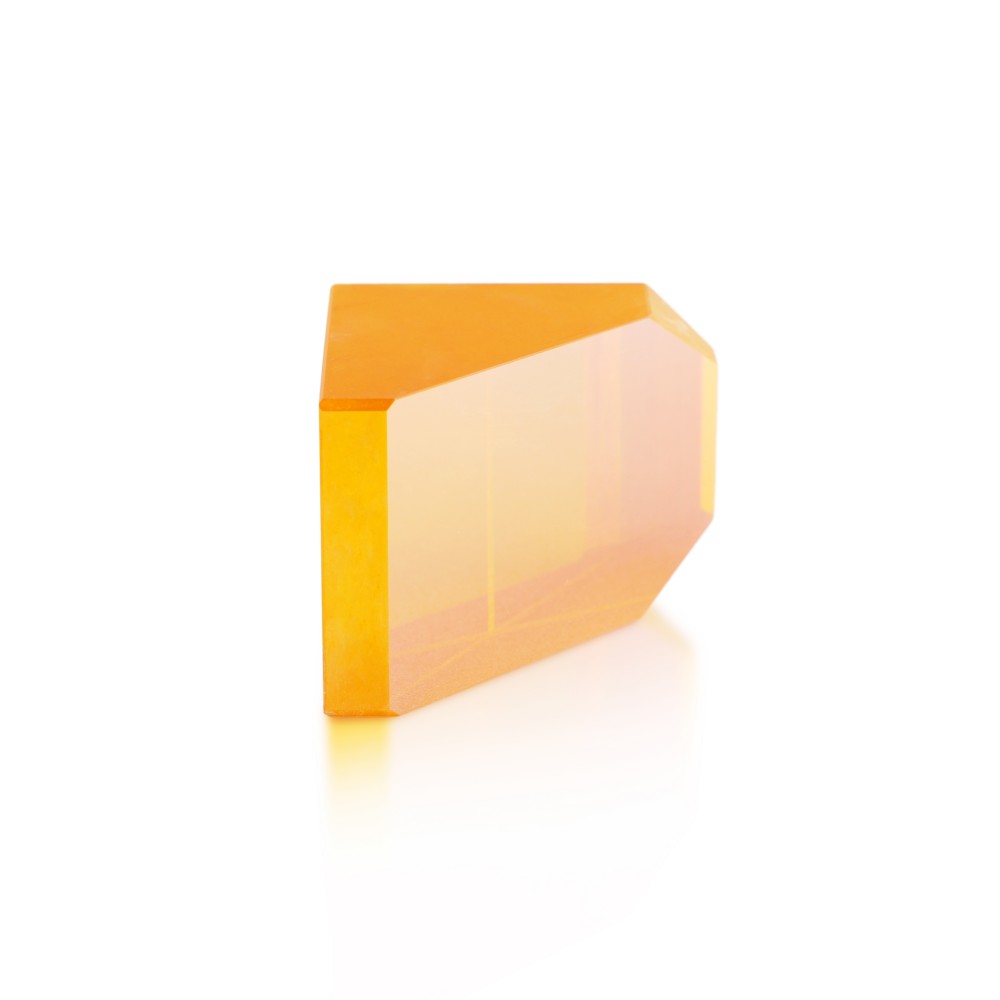
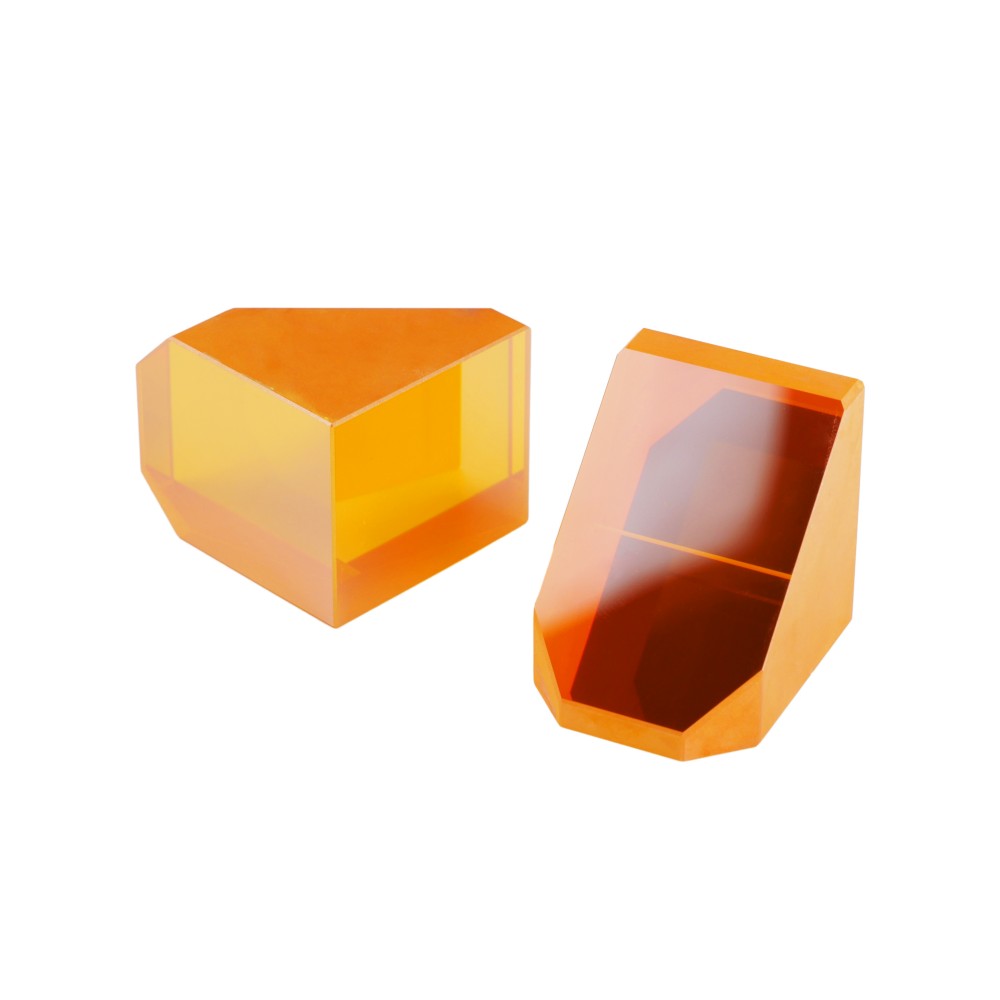
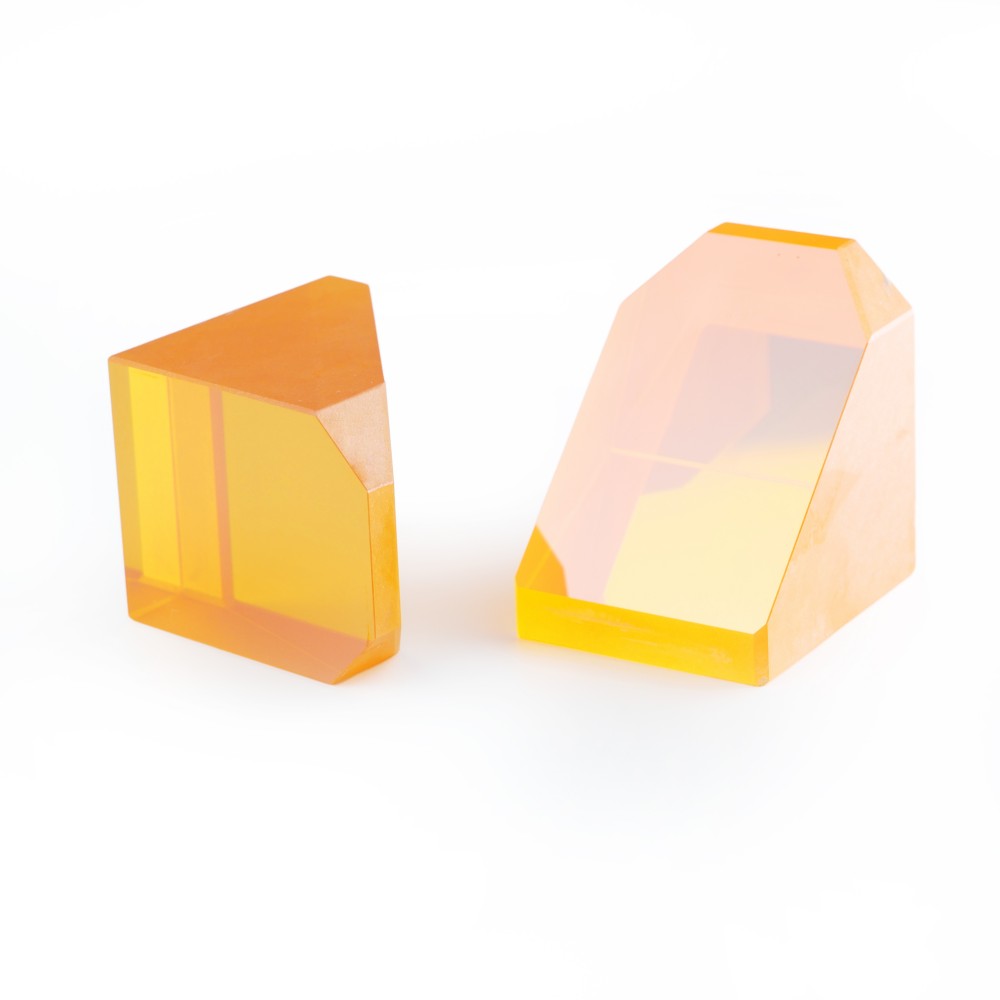
Zinc Selenide (ZnSe) optical prisms are advanced optical components made of the compound zinc selenide. ZnSe prisms are highly valuable in optical systems that require high transmittance, low absorption, and minimal light distortion in the infrared range.
ServiceServiceZinc selenide (ZnSe) optical prisms are advanced optical components made from the compound zinc selenide. ZnSe prisms are highly valuable in optical systems requiring high transmittance, low absorption, and minimal optical distortion in the infrared range. Due to its unique combination of optical clarity, mechanical strength, and thermal stability, ZnSe is used in a wide variety of demanding applications. Whether in military, medical, aerospace, or industrial environments, ZnSe remains the material of choice for advanced optical technology.
Performance characteristics
Broad Spectral Transparency: Zinc selenide has excellent optical transmission in both the visible and infrared regions, with particular strength in the infrared spectrum (approximately 0.5 to 20 microns). This makes ZnSe prisms ideal for infrared applications such as thermal imaging, spectroscopy, and laser systems.
Low absorption and minimal light loss: ZnSe has a low absorption coefficient in the infrared range, minimizing light loss and ensuring efficient light transmission. This property is crucial for high-performance optical systems that need to maintain light intensity and clarity.
High refractive index: ZnSe has a refractive index of approximately 2.4 at infrared wavelengths, enabling it to efficiently bend light with high precision. This property makes ZnSe prisms useful for controlling light paths, beam splitting, and wavelength separation in complex optical systems.
Thermal stability: ZnSe is stable over a wide temperature range, making it suitable for high-temperature applications. Its relatively low coefficient of thermal expansion (CTE) ensures that its optical properties remain stable despite temperature fluctuations. This thermal stability is particularly important for infrared optics used in environments where temperature fluctuations are common.
Durability and Scratch Resistance: ZnSe is durable and resistant to physical damage. While not as hard as other optical materials like sapphire, it is still very resistant to scratches and other mechanical stresses, ensuring long-term reliability in harsh environments.
application
Infrared Imaging and Thermal Sensing: ZnSe prisms are essential in infrared imaging systems, such as thermal imagers, night vision systems, and surveillance applications. Their high transmittance in the infrared range enables them to effectively capture heat signatures, which is crucial for military, security, and industrial monitoring applications.
Laser Systems: ZnSe prisms are used for laser beam steering, wavelength separation, and beam shaping in high-power laser systems. They can process high-intensity infrared light with minimal distortion, making them ideal for industrial laser applications, medical lasers, and laser-based material processing.
Spectroscopy: In infrared spectroscopy, ZnSe prisms are used to scatter light and analyze materials based on their absorption or reflection properties at different wavelengths. The material's transparency in the infrared region makes it ideal for environmental monitoring, chemical analysis, and medical diagnostics.
Aerospace and Military: ZnSe prisms are often found in optical systems used in aerospace and military technology, such as missile guidance, targeting systems, and optical sensors. Their ability to efficiently transmit infrared light and their resistance to environmental factors such as temperature changes and mechanical stress make them crucial in military and space applications.
Optical Communications: ZnSe prisms are used in optical communications systems, including free-space optics (FSO) and fiber-optic systems, where optical signals need to be manipulated or separated. The material's ability to process infrared light is particularly beneficial in communications systems that rely on wavelengths in the infrared spectrum.
Medical devices: ZnSe is used in medical optics, particularly for non-invasive diagnostic tools such as infrared thermometers, endoscopy systems, and optical coherence tomography (OCT) devices. The material’s transparency in the infrared spectrum enables precise imaging and measurement of internal tissues, blood flow, and other physiological parameters.
Industrial and Semiconductor Applications: ZnSe prisms are used in industrial applications involving laser cutting, welding, and materials processing. They are also used in semiconductor inspection and metrology systems, where precision optics are needed to detect defects or measure wafer surfaces.
Technical requirements | Commercial Grade | Precision grade | High precision grade |
Size range | 1-300mm | 2-300mm | 2-300mm |
Dimensional tolerance | ±0.1mm | ±0.025mm | ±0.01mm |
Thickness tolerance | ±0.1mm | ±0.025mm | ±0.01mm |
Angle tolerance | ±3' | ±30" | ±5' |
Surface quality | 60-40 | 40-20 | 10-20 |
Surface accuracy | 1.0∧ | ∧/10 | ∧/20 |
Coating | AR/AR 7-12μm/10.6μm/2-13μm | ||
Chamfer | 0.1-0.5mm×45° | ||
Material | zinc selenide | ||