Clear records
history record
cancel
Clear records
history record





 The browser own share function is also very useful~
 Service
 Service
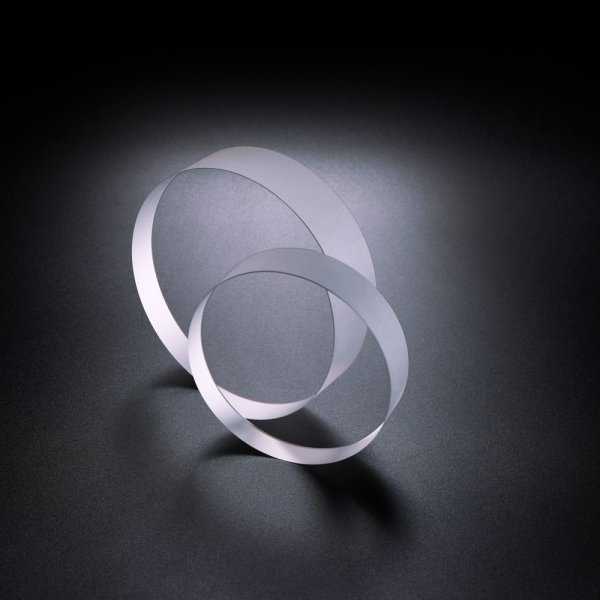
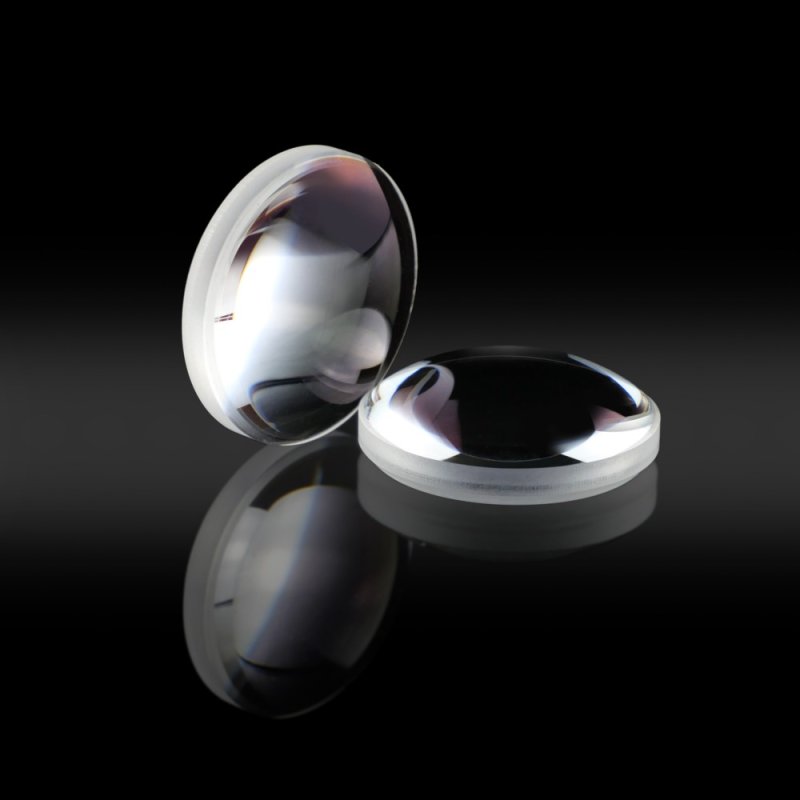
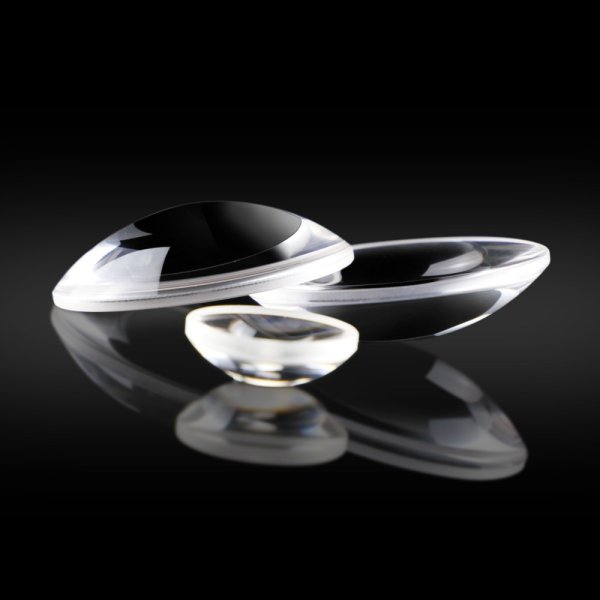
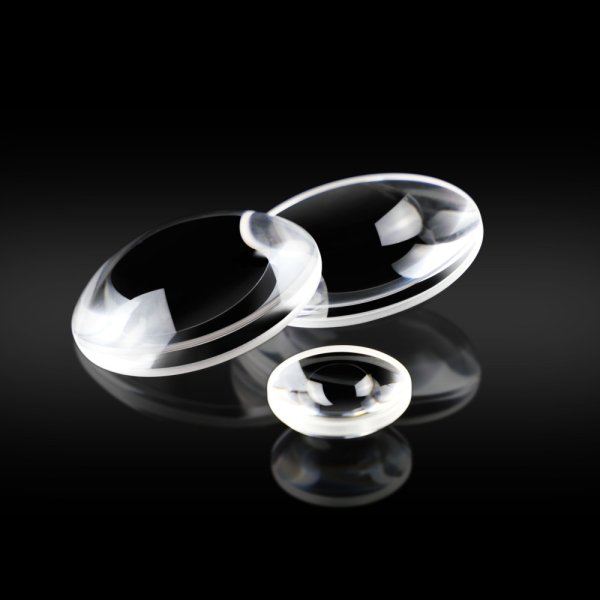
Optical glass is a key material used in lens manufacturing, boasting high transparency, high light transmittance, excellent temperature resistance, and chemical stability. Optical glass is typically composed primarily of silicon dioxide (SiO2), and its refractive index and dispersion can be tailored to suit specific application requirements. Optical glass also has a low coefficient of thermal expansion, enabling it to maintain stable optical performance despite significant temperature fluctuations.
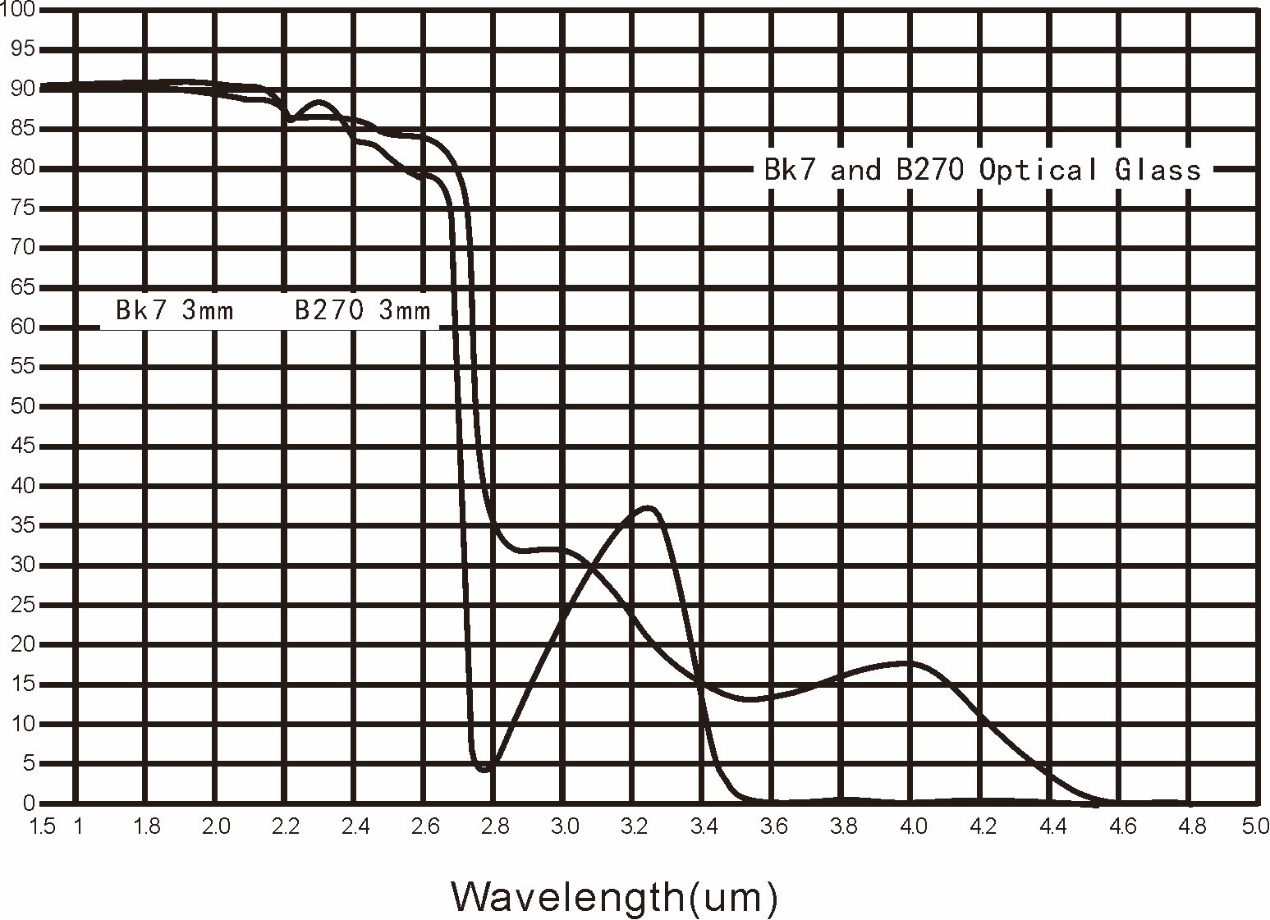
Optical glass transmits a wide range of wavelengths, from ultraviolet to infrared. Generally speaking, optical glass transmits light with a wavelength of 0.35-2.5 μm, and strongly absorbs light outside this range. Different types of optical glass are suitable for different wavelength ranges.
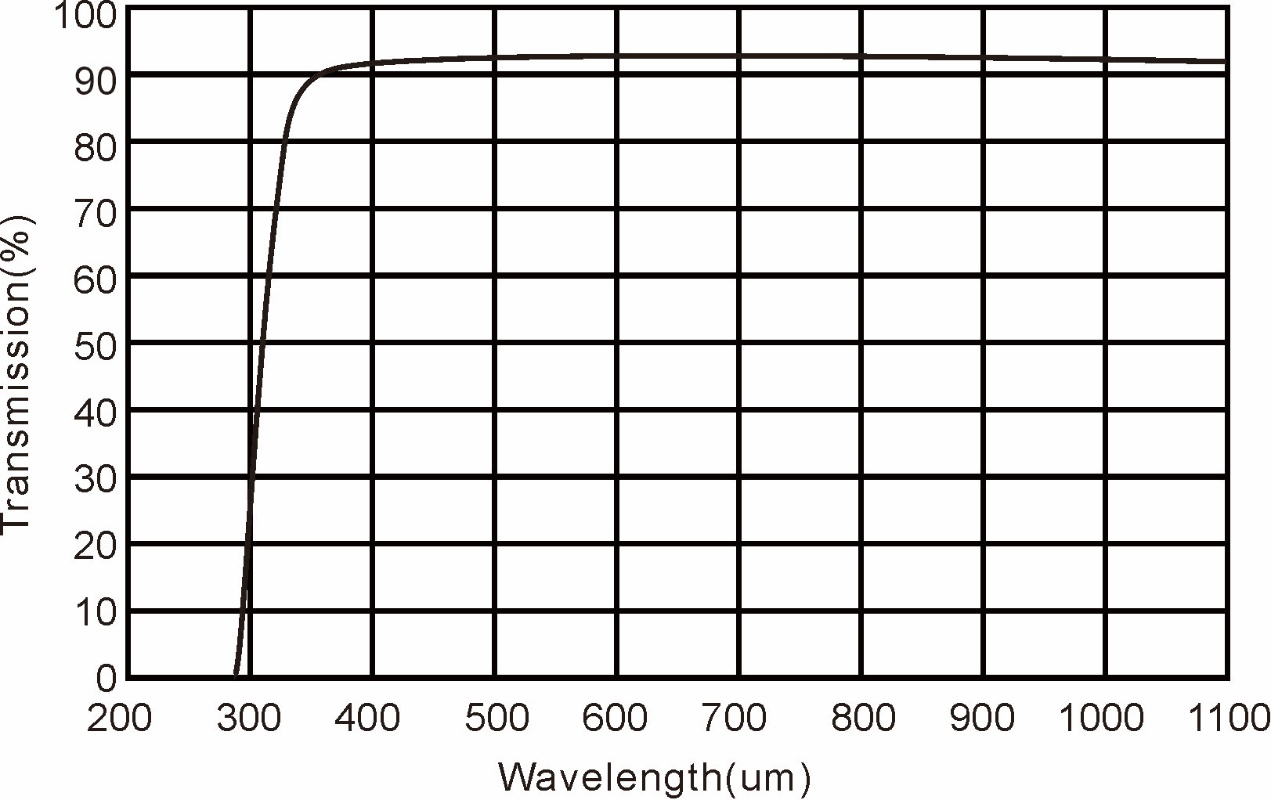
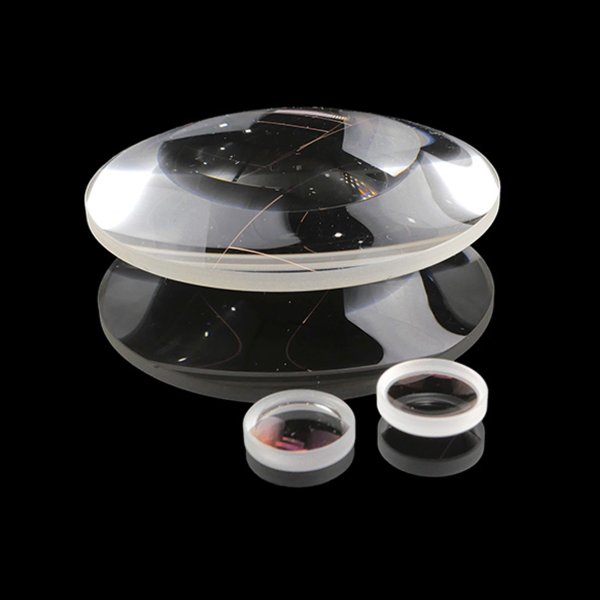
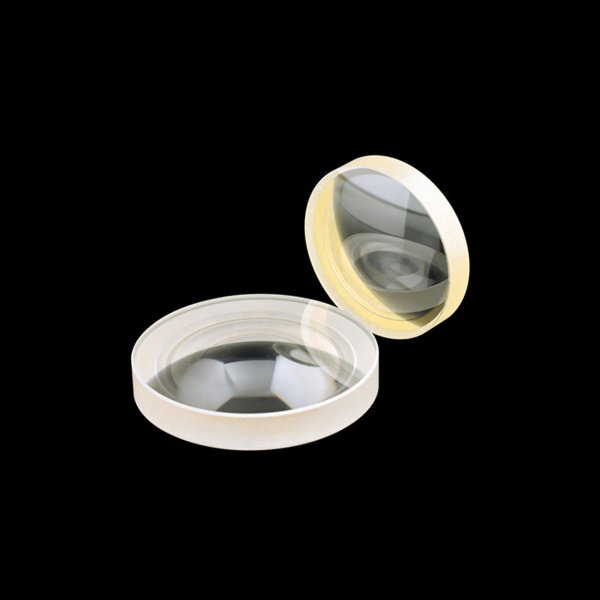
Optical glass lenses are widely used in a variety of fields, including security surveillance, in-vehicle systems, digital cameras, lasers, and various optical instruments. In these applications, optical glass lenses achieve imaging and light transmission by focusing, collimating, and diffusing light beams. For example, in security surveillance, optical glass lenses are used in high-definition camera lenses to ensure image clarity and stability. Furthermore, optical glass lenses are used in scientific research instruments such as microscopes and telescopes to improve image quality.
1. Classification by lens shape
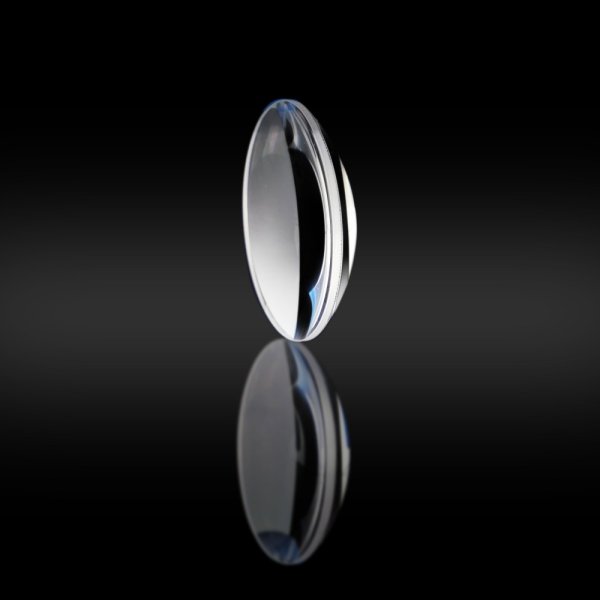
Convex lens : A lens that is thicker in the center and thinner at the ends. It allows parallel light rays to converge at a focal point and is primarily used for magnifying objects and forming images. Convex lenses are further divided into biconvex lenses, plano-convex lenses, and concave-convex lenses.
Concave lens : Thinner in the center and thicker at the ends, it can diverge parallel light rays and is mainly used to shrink objects and disperse light. Concave lenses include biconcave lenses, plano-concave lenses, and convex-concave lenses.
2. Classification by lens surface shape
Spherical lens : more common, its curved surface is cut from a sphere of the same radius, used for general optical applications.
Aspheric lens : The curved surface shape is not a sphere, but other curved shapes, such as ellipse or hyperbola, which is used to correct spherical aberration and achieve more precise imaging.
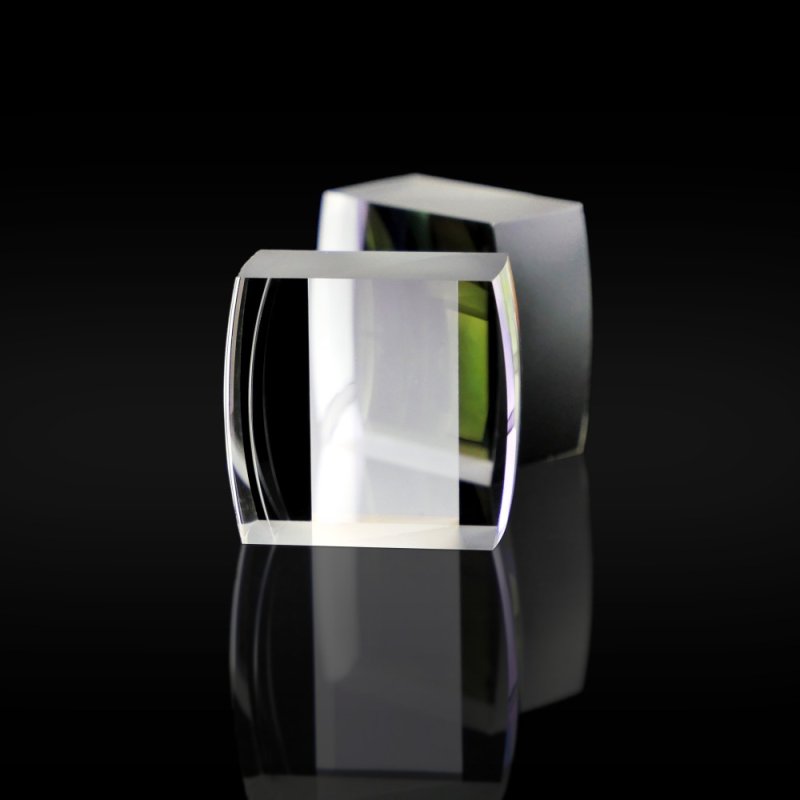
Cylindrical lens : The surface is cylindrical and is often used to correct astigmatism.
3. Classification by function
Achromatic lens : composed of two birefringent crystals made of two different materials, it can achieve uniform phase retardation over a wide wavelength range and improve the effect of temperature on the lens.
Compound lens : A lens composed of multiple simple lenses that are used to eliminate aberrations in a single lens.
Fresnel lens : The optical surface is divided into narrow rings, making the lens thinner, lighter, durable and low-cost.
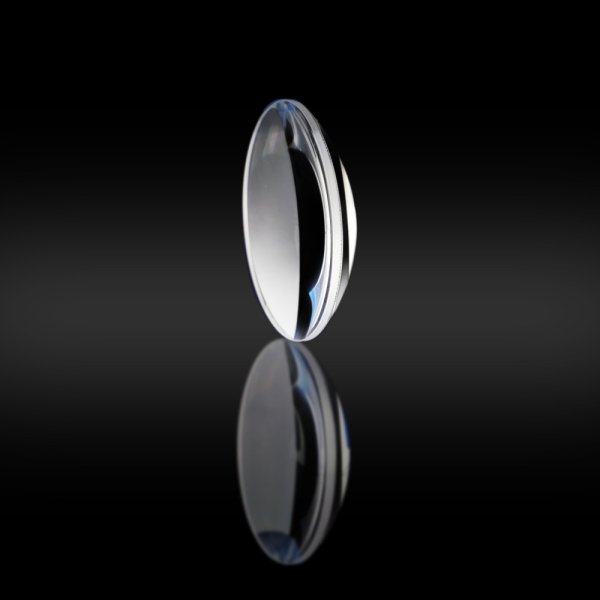
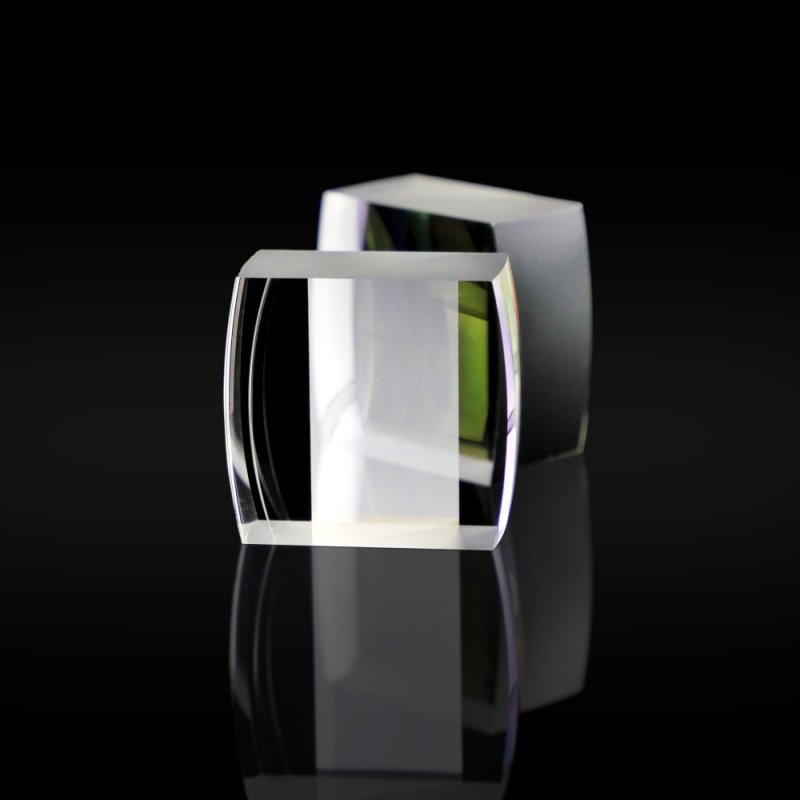
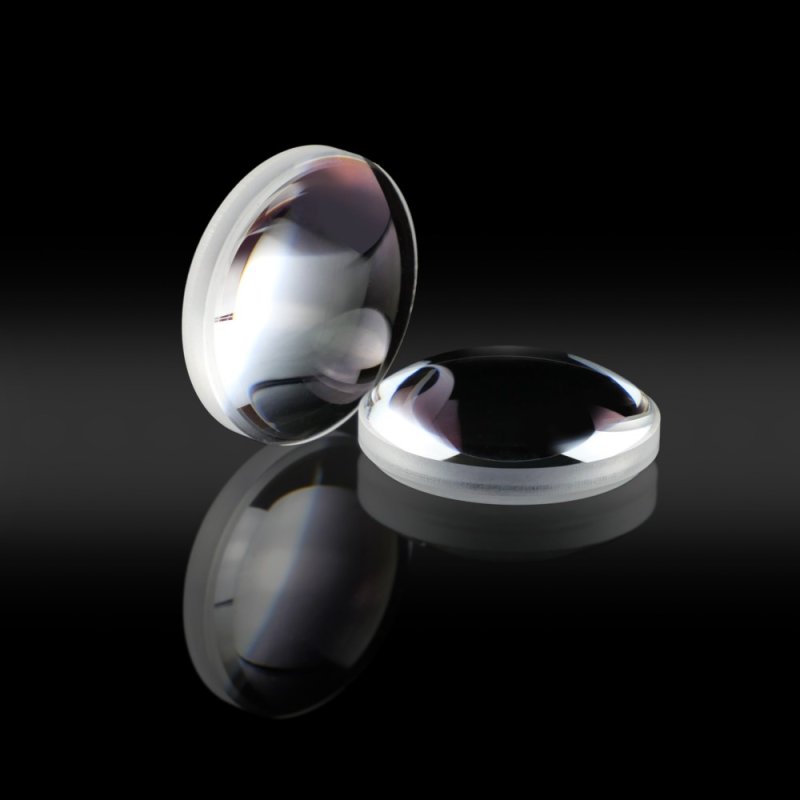
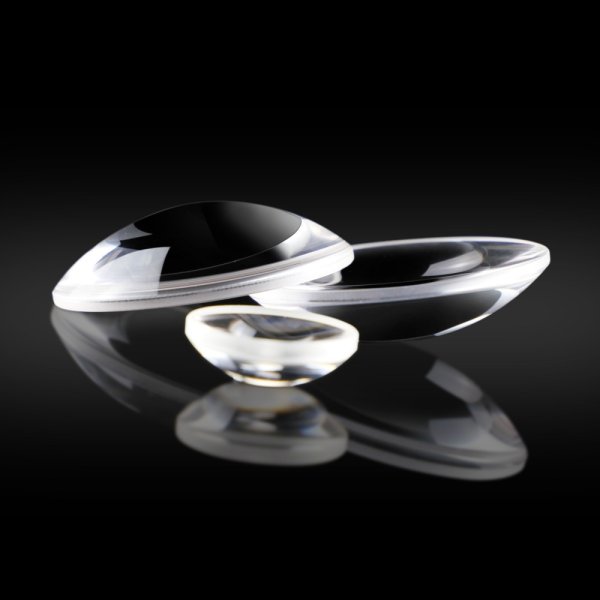
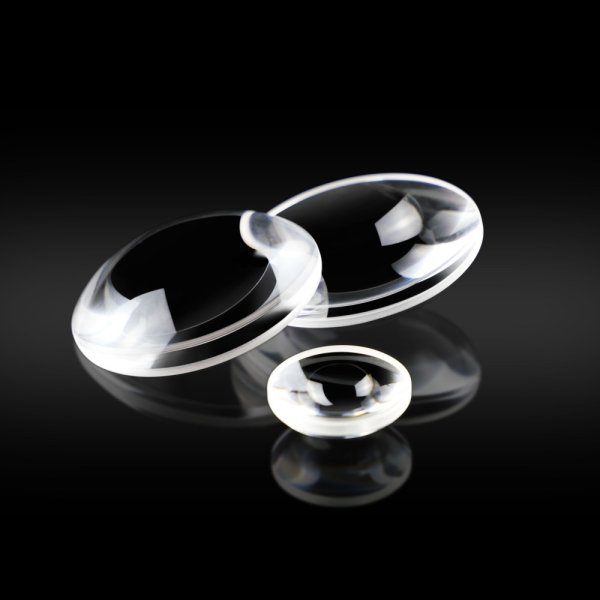
Optical glass is a key material used in the manufacture of lenses, with the characteristics of high transparency, high light transmittance, good temperature resistance and chemical stability.
ServiceServiceOptical glass is a key material used in lens manufacturing, boasting high transparency, high light transmittance, excellent temperature resistance, and chemical stability. Optical glass is typically composed primarily of silicon dioxide (SiO2), and its refractive index and dispersion can be tailored to suit specific application requirements. Optical glass also has a low coefficient of thermal expansion, enabling it to maintain stable optical performance despite significant temperature fluctuations.
Optical glass transmits a wide range of wavelengths, from ultraviolet to infrared. Generally speaking, optical glass transmits light with a wavelength of 0.35-2.5 μm, and strongly absorbs light outside this range. Different types of optical glass are suitable for different wavelength ranges.
Optical glass lenses are widely used in a variety of fields, including security surveillance, in-vehicle systems, digital cameras, lasers, and various optical instruments. In these applications, optical glass lenses achieve imaging and light transmission by focusing, collimating, and diffusing light beams. For example, in security surveillance, optical glass lenses are used in high-definition camera lenses to ensure image clarity and stability. Furthermore, optical glass lenses are used in scientific research instruments such as microscopes and telescopes to improve image quality.
1. Classification by lens shape
Convex lens : A lens that is thicker in the center and thinner at the ends. It allows parallel light rays to converge at a focal point and is primarily used for magnifying objects and forming images. Convex lenses are further divided into biconvex lenses, plano-convex lenses, and concave-convex lenses.
Concave lens : Thinner in the center and thicker at the ends, it can diverge parallel light rays and is mainly used to shrink objects and disperse light. Concave lenses include biconcave lenses, plano-concave lenses, and convex-concave lenses.
2. Classification by lens surface shape
Spherical lens : more common, its curved surface is cut from a sphere of the same radius, used for general optical applications.
Aspheric lens : The curved surface shape is not a sphere, but other curved shapes, such as ellipse or hyperbola, which is used to correct spherical aberration and achieve more precise imaging.
Cylindrical lens : The surface is cylindrical and is often used to correct astigmatism.
3. Classification by function
Achromatic lens : composed of two birefringent crystals made of two different materials, it can achieve uniform phase retardation over a wide wavelength range and improve the effect of temperature on the lens.
Compound lens : A lens composed of multiple simple lenses that are used to eliminate aberrations in a single lens.
Fresnel lens : The optical surface is divided into narrow rings, making the lens thinner, lighter, durable and low-cost.